Why Can Students Watch Videos for 30 Minutes but Struggle to Read for 10?
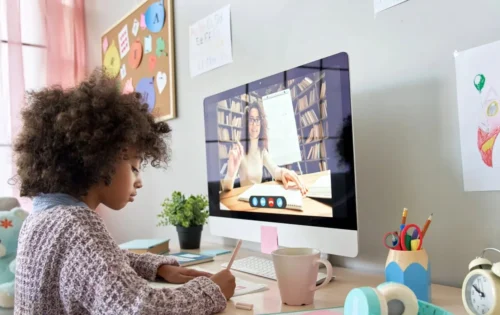
A student can watch short videos one after another without losing interest, yet struggle to concentrate on a textbook for ten minutes.
For many parents, this has become a familiar concern. Homework takes longer than expected, revision is repeatedly interrupted, and a simple task can turn into hours of distracted study.
The concern goes beyond screen time. Parents want to know whether their child is actually learning, understanding concepts, and developing the ability to study independently.
Technology has brought enormous benefits to education. Students can access online resources, educational videos, digital practice materials, and online tutoring with ease. But smartphones, social media, gaming, streaming platforms, and constant notifications also compete for their attention.
The challenge is not to eliminate technology. It is to help students learn how to use technology without allowing it to control their attention.
Parents across the USA, Canada, the UK, Australia, and the GCC are increasingly recognising that success is no longer defined by grades alone. They want their children to become confident problem-solvers, effective communicators, creative thinkers, and lifelong learners.
This is where skill-based learning plays a vital role.
At Tutorwaves, we have seen students discover unexpected passions after exploring subjects such as Coding, Chess, Artificial Intelligence (AI), Robotics, Public Speaking, Music, and Creative Arts alongside their school curriculum. These experiences often spark new interests, build confidence, and help students make informed decisions about their future.
Why Are Digital Distractions So Powerful?
Digital content is designed to provide constant stimulation. Students can move from one video, message, game, or post to another within seconds.
Learning is different.
A mathematics problem may require several minutes of concentration. A science topic may need careful reading. A comprehension passage requires students to follow information from beginning to end.
These activities require patience and sustained attention.
When students frequently switch between digital activities, slower academic tasks may feel more difficult. This does not mean students are lazy or less capable. It simply means their attention is being constantly divided.
And attention is one of the foundations of effective learning.
How Digital Distractions Affect Students
Homework Takes Longer
A task that should take 30 minutes can easily become an hour when students repeatedly check their phones or switch between activities.
The issue is often not the amount of work but the amount of focused attention given to it.
Reading and Comprehension Can Suffer
Long-form reading requires concentration. Students need to follow ideas, remember details, and understand context.
Frequent digital interruptions can make it harder to remain engaged with longer passages, which can affect comprehension and performance across subjects.
Revision Becomes Less Effective
Good exam preparation requires more than reading notes. Students need to practise questions, recall information, review mistakes, and work through challenging topics.
Constant interruptions can make revision less productive, even when students spend a lot of time studying.
Difficult Questions Can Feel More Frustrating
Learning does not always provide an immediate answer.
A student may need several attempts to solve a mathematics problem or understand a science concept. Developing the patience to stay with a difficult task is essential for building problem-solving and critical thinking skills.
What Can Parents Do?
Parents do not need to create a completely technology-free environment.
Instead, small changes can help students develop healthier study habits.
Create focused study periods.
Start with manageable periods of uninterrupted work, such as 20–30 minutes, and gradually increase them.
Reduce unnecessary notifications.
Keeping phones away during study time can remove some of the easiest distractions.
Encourage purposeful breaks.
Breaks are important, but a five-minute break can quickly become an hour of scrolling. Encourage activities that allow students to return to learning easily.
Create a consistent study environment.
A quiet, organised space can help students associate that environment with focused learning.
Encourage independent practice.
Students should have opportunities to solve problems, complete practice papers, and read without immediately searching for an answer online.
Most importantly, parents should remember that focus is a skill that can be developed.
A student who can concentrate for ten minutes today may gradually be able to focus for twenty, thirty, or longer.
How Tutorwaves Can Support Focused Learning
Every student learns differently. Some need additional explanation, others need more practice, while some benefit from greater structure and individual attention.
This is where personalised learning and one-to-one tutoring can make a difference.
At Tutorwaves, students can work in a structured environment where they can focus on specific learning goals, ask questions, practise challenging areas, and receive individual feedback.
A focused tutoring session can help students develop:
- Better study habits
- Time-management skills
- Confidence in difficult subjects
- Independent learning skills
- Problem-solving abilities
- More effective exam preparation
The goal is not simply to help students complete today’s homework or prepare for the next test.
It is to help them become more confident and independent learners over time.
Preparing Students for a Digital Future
Technology will continue to play an important role in education, university, and the workplace.
Students therefore need more than digital skills. They also need to know when to disconnect from distractions and concentrate deeply.
As information and AI tools become increasingly accessible, skills such as critical thinking, problem-solving, independent learning, and applying knowledge become even more valuable.
A student who can focus, analyse information, and work through an unfamiliar problem is developing skills that extend well beyond school examinations.
Final Thoughts
Digital distractions are now a normal part of students’ lives. The answer is not necessarily less technology, but better control over attention.
Small habits can make a meaningful difference: putting the phone away during study sessions, taking purposeful breaks, practising without constant digital assistance, and gradually increasing focused study time.
With the right structure and support, students can learn to manage distractions and develop stronger concentration.
At Tutorwaves, the focus is not only on helping students achieve their immediate academic goals, but also on helping them develop the confidence, independence, and learning habits they can carry forward.
In a world competing constantly for a student’s attention, learning how to focus may be one of the most valuable skills they can develop.