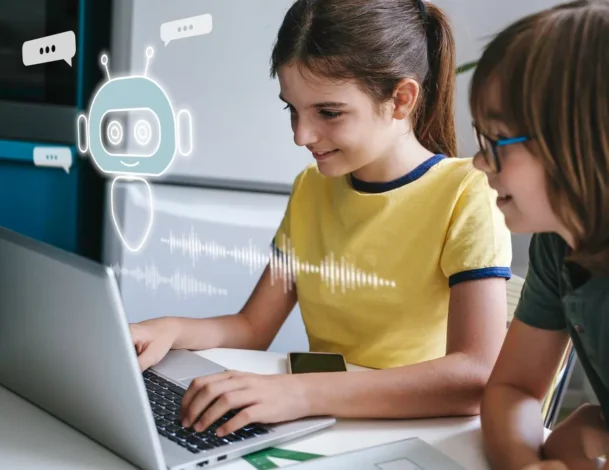
The global education landscape is undergoing a paradigm shift, powered by exponential advancements in Artificial Intelligence (AI), machine learning (ML), and data science. These technologies are no longer peripheral tools—they are central to redefining how knowledge is imparted, absorbed, and applied.
At Tutorwaves, we stand at the intersection of pedagogy and innovation—leveraging cutting-edge intelligent technologies to deliver education that is not only personalized but also predictive, adaptive, and scalable.
The Rise of Cognitive Computing in Education
At the core of AI’s role in education is cognitive computing—a technology that mimics human thinking to support decision-making and learning. By combining natural language processing (NLP), reinforcement learning, and knowledge representation systems, cognitive computing enables machines to:
- Understand context in student interactions
- Interpret intent and emotion
- Offer personalized educational guidance
Through these tools, AI tutors can now engage in natural conversation, detect when a learner is confused, and adjust teaching approaches in real time.
Hyper-Personalized Learning: Driven by Data and Algorithms
Personalized learning is evolving into hyper-personalized learning—where each student receives a learning path as unique as their fingerprint. This is powered by techniques like:
- Deep learning algorithms: which detect patterns in student behavior
- Bayesian knowledge tracing: a statistical method to estimate what a student knows based on previous answers
- Neural collaborative filtering: which predicts the best next topic using models similar to Netflix’s recommendation engine
Platforms like Tutorwaves use these to deliver curated content tailored to a learner’s Zone of Proximal Development (ZPD)—the sweet spot just beyond what they can do independently, maximizing progress without frustration.
For example, our platform may reduce the reading complexity of a passage if the system detects that a student re-read it multiple times or spent longer than expected, making real-time adjustments to support comprehension.
Learning Analytics and Predictive Modeling
Modern AI-driven education platforms harness predictive analytics to anticipate performance trends, learning gaps, and disengagement. Using tools like:
- Multivariate regression
- Time-series analysis
- Markov decision processes (which model sequences of student actions to recommend optimal learning paths)
At Tutorwaves, we employ Learning Analytics Dashboards (LADs) to provide tutors, parents, and students with live insights into performance—such as average response times, topic mastery levels, and learning velocity.
In a recent pilot across 5 countries, our ZPD-aligned content delivery led to a 22% improvement in concept mastery within 4 weeks—demonstrating the real-world impact of predictive education.
Emotion AI and Neuroadaptive Interfaces
The next frontier in edtech is emotionally aware AI—systems that understand how learners feel as they study. Using:
- EEG-integrated headsets (brainwave trackers)
- Facial expression recognition
- Voice modulation analysis
AI can now detect cognitive overload and adjust pacing or suggest breaks when frustration builds. These neuroadaptive systems, which adapt not just to what a student knows but how they emotionally respond, are part of our future roadmap.
We envision a world where Tutorwaves’ AI doesn’t just guide what a student learns—but also when they need encouragement or a pause.
Global AI Classrooms: Democratizing Access to Education
AI is dismantling geographic and linguistic barriers through:
- Real-time translation with NLP
- Localized content adaptation
- Automatic curriculum alignment with international standards (e.g., IB, ICSE, AQA, CCSS)
This makes Tutorwaves a truly global learning platform—already supporting learners across the U.S., U.K., India, Australia, and more, while maintaining cultural relevance and curriculum precision.
Human-AI Collaboration: Augmented Intelligence in Tutoring
Rather than replacing educators, Tutorwaves champions augmented intelligence—where AI enhances human tutors’ effectiveness. This allows:
- Teachers to focus on critical thinking and high-order skills
- AI to handle diagnostics, grading, and real-time feedback
- Co-teaching models where tutors and AI collaborate during lessons
Our LPT Framework (Learn-Practice-Test) exemplifies this synergy. AI tailors practice tasks based on diagnostic tests, while expert tutors guide conceptual understanding and correct misconceptions—creating a 360° learning loop.
What Lies Ahead: Quantum AI, Blockchain & Immersive Classrooms
The future of education is being shaped by powerful technologies. While some are still emerging, Tutorwaves is actively piloting their application to stay ahead of the curve:
- Quantum AI
Quantum Machine Learning (QML) could enable near-instant personalization by processing vast data in milliseconds—though still in early development. - Blockchain in Credentialing
Secure digital records for assessments and achievements promise verifiable credentials that follow students across borders and careers. - AR/VR + AI Integration
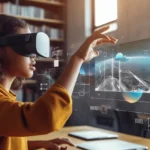
Immersive classrooms—particularly in STEM—make abstract concepts tangible, improving understanding through virtual labs and simulations.
Shaping the Future, Responsibly
AI is no longer futuristic—it’s foundational. But innovation must go hand in hand with ethical responsibility. At Tutorwaves, we’re committed to:
- Data privacy and student rights
- Equity in access across geographies
- Accessibility-first design principles
Our vision is rooted in responsible innovation—where AI amplifies human potential without compromising trust.
“AI tutors at Tutorwaves interpret emotion in real time. Personalized learning now adapts with every click, pause, or question.”
The Tutorwaves Promise
We’re not just adapting to the future of education—we’re building it.
One student. One breakthrough. One responsible advancement at a time.
Want to experience AI-powered learning firsthand? Book a Enroll Now personalized demo with a Tutorwaves expert today.