Every report card season, a familiar scene unfolds in homes across the United States, Canada, the United Kingdom, Australia, and the GCC. Parents review grades, percentages, and teacher comments, hoping they reflect their child’s true progress.
But many families have experienced a puzzling reality.
A student scores highly in an exam, yet struggles to explain the same concept a few weeks later. Another earns excellent grades in mathematics but finds it difficult to apply those concepts to unfamiliar problems. Some students appear successful on paper while quietly battling a lack of confidence when faced with new academic challenges.
These situations raise an important question:
Do good grades always mean genuine understanding?
While grades remain an important measure of academic performance, educators around the world are increasingly recognizing that true learning goes far beyond report cards. Modern education is gradually shifting its focus from simply achieving marks to developing deeper understanding, critical thinking, problem-solving skills, and long-term learning outcomes.
The Growing Pressure to Perform
Today’s students learn in highly competitive academic environments. From school assessments and university admissions to standardized examinations such as the SAT, GCSE, A Levels, AP, and IB programs, performance metrics play a significant role in shaping educational opportunities.
As a result, many students naturally focus on achieving the highest possible scores. While ambition is healthy, an excessive emphasis on grades can unintentionally encourage learning habits that prioritize short-term performance over lasting understanding.
These habits often include:
-
Memorizing information without fully understanding the underlying concepts.
-
Studying primarily for specific test formats.
-
Relying on last-minute cramming before examinations.
-
Avoiding challenging questions for fear of making mistakes.
-
Measuring success solely through marks rather than knowledge gained.
Although these strategies may sometimes produce good grades, they often leave students with knowledge that fades quickly after the exam is over.
When High Grades Don't Tell the Whole Story
One of the most common concerns expressed by parents and educators is that students often struggle to retain what they have learned.
Consider a student who memorizes a scientific formula for an exam on Friday but cannot apply it to a real-world situation the following week. Or a student who successfully completes a set of practice questions but becomes confused when the same concept appears in a different format.
These situations do not necessarily indicate a lack of intelligence or effort. Instead, they often reveal a gap between memorization and understanding.
In today’s world, success increasingly depends on skills that extend beyond recalling information. Universities and employers value individuals who can:
-
Analyze unfamiliar situations.
-
Think critically.
-
Solve problems independently.
-
Communicate ideas clearly.
-
Adapt to changing circumstances.
Developing these abilities requires deeper learning than memorization alone can provide.
Why Traditional Classroom Models Sometimes Create Learning Gaps
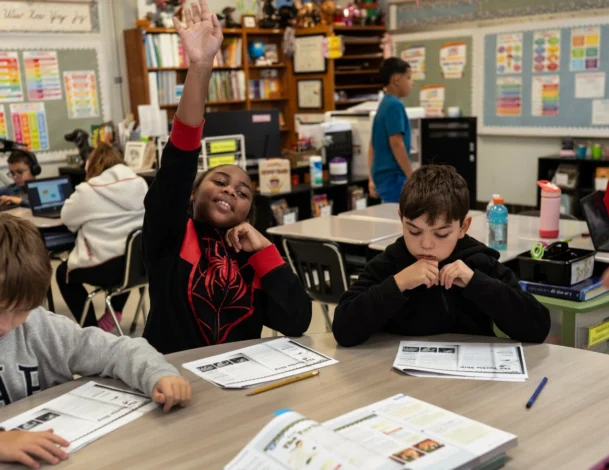
Teachers work incredibly hard to support their students. However, traditional classroom environments face a challenge that is difficult to overcome: every student learns at a different pace.
In a classroom of many learners, some students grasp concepts quickly, while others need additional explanations, examples, and practice. Yet curriculum schedules often require the class to move forward within a fixed timeframe.
As a result, students may progress to new topics before fully mastering previous ones.
For example, a learner who has only partially understood algebra may find future topics increasingly difficult. Small misunderstandings can gradually become larger learning gaps, making advanced concepts feel overwhelming.
Over time, these gaps can affect both academic performance and confidence.
This is why many education experts advocate a different approach: rather than treating time as fixed and understanding as variable, they suggest treating mastery as the goal and allowing students the support they need to achieve it.
The Shift Toward Outcome-Based Learning
Modern educational frameworks are increasingly embracing outcome-based learning, an approach that focuses on what students can actually understand, apply, and demonstrate rather than simply what content has been covered.
Instead of asking, “Did we finish the chapter?” outcome-based learning asks:
“Can the student confidently use what they have learned?”
This approach emphasizes three important principles.
1. Early Identification of Learning Gaps
Rather than waiting until major examinations reveal weaknesses, learning progress is monitored continuously.
Regular assessments, targeted feedback, and ongoing observation help identify areas where additional support may be needed before small issues become significant obstacles.
2. Building Genuine Academic Confidence
True confidence comes from understanding.
When students grasp the reasoning behind concepts rather than memorizing procedures, they become more comfortable tackling unfamiliar questions and complex problems. This reduces exam anxiety and encourages independent thinking.
3. Continuous Growth Rather Than High-Stakes Pressure
Learning becomes more productive when students receive consistent feedback instead of relying solely on a few major examinations.
Regular practice, meaningful assessments, and clear academic goals create an environment where progress can be measured steadily and constructively.
Signs a Student May Be Learning for Grades Rather Than Understanding
Parents often ask how they can identify whether their child is developing genuine understanding or simply preparing for tests.
Some common indicators include:
-
Concepts are forgotten shortly after examinations.
-
Homework requires significant assistance despite good test scores.
-
Confidence drops when questions are presented differently.
-
Students struggle to explain how they arrived at an answer.
-
Anxiety increases significantly before assessments.
-
Learning feels like a task to complete rather than a process of discovery.
Recognizing these signs early allows families to provide support before frustration and disengagement develop.
The Growing Role of Personalized Online One-to-One Tutoring
As educators and families place greater emphasis on learning outcomes, personalized learning has become increasingly important.
Every learner is unique. Some benefit from additional time to strengthen foundational concepts, while others require advanced challenges to remain engaged and motivated.
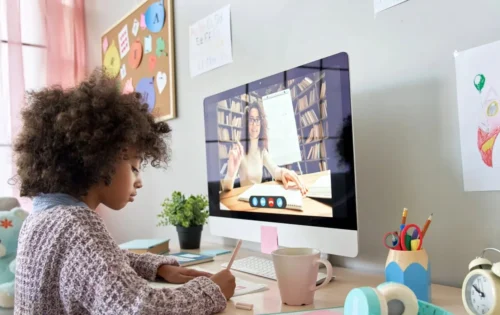
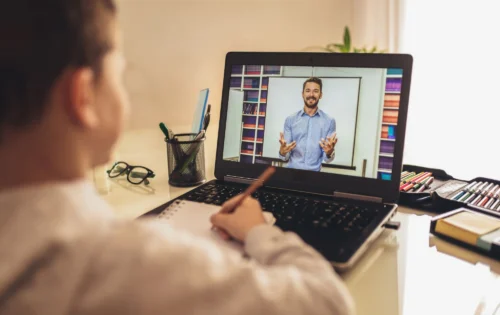
This is one reason why live one-to-one online tutoring has become an important part of modern education.
Personalized online tutoring allows instruction to be adapted to the individual learner’s pace, goals, strengths, and challenges. Students can ask questions freely, revisit difficult concepts, and receive targeted support without the pressure often associated with larger classroom settings.
Whether a learner requires:
-
K-12 academic support,
-
SAT preparation,
-
GCSE, A Levels, AP, or IB tutoring,
-
University-level assistance,
-
Homework and assignment support,
-
Coding, chess, performing arts, or other enrichment programs,
personalized instruction helps ensure that learning remains focused on meaningful outcomes rather than simply completing a syllabus.
How Structured Personalized Learning Supports Better Outcomes
Effective personalized learning involves more than individual attention. It requires a structured framework that keeps students accountable while supporting their growth.
Successful programs often include:
-
Customized learning plans aligned with student goals.
-
Regular homework and practice assignments.
-
Ongoing assessments and achievement tracking.
-
Progress reports and feedback.
-
Parent-teacher conferences and communication.
-
Continuous refinement of learning strategies based on performance.
When these elements work together, students gain clarity about their progress and develop stronger ownership of their learning journey.
Beyond the Report Card: What Success Really Looks Like
Strong grades will always matter. They can open doors to universities, scholarships, and future opportunities. However, grades alone cannot tell the full story of a student’s educational journey.
The students who thrive in today’s rapidly evolving world are not simply those who memorize information for examinations. They are the learners who can think critically, solve unfamiliar problems, communicate effectively, and adapt confidently to new challenges.
That is why many families are looking beyond traditional measures of success and embracing learning approaches that focus on understanding, application, and long-term growth.
At Tutorwaves, we believe education should be as unique as every learner. Through live one-to-one online tutoring, experienced specialist tutors, structured lesson planning, regular assessments, homework support, progress tracking, achievement tests, and ongoing parent communication, we help students build not only stronger academic performance but also the confidence, independence, and lifelong learning skills needed for future success.
Whether supporting a school student, a university learner, or an adult pursuing new goals, our focus remains the same: helping learners achieve meaningful outcomes through personalized, high-quality education.
Because the true measure of education is not simply the grade earned today—it is the knowledge, curiosity, capability, and confidence that continue to create opportunities for years to come.