For decades, academic success was often measured by how much information a student could remember. Memorizing historical dates, mathematical formulas, scientific definitions, and grammar rules played an important role in classroom learning and examinations.
While foundational knowledge continues to be essential, the world students are preparing for has changed dramatically.
Today, information is available within seconds through books, digital resources, and AI-powered tools. Success is no longer defined by simply recalling facts—it depends on understanding concepts, evaluating information, solving problems, communicating ideas effectively, and applying knowledge in meaningful ways.
This shift is transforming education across the globe. Parents, educators, and employers increasingly recognize that while knowledge forms the foundation, communication and critical thinking determine how effectively students use that knowledge.
1. Knowledge Is Abundant. Understanding Makes the Difference.
Students today have access to more information than any previous generation. However, access to information does not automatically lead to understanding.
Modern education places greater emphasis on helping students analyze information, identify reliable sources, connect ideas, and draw meaningful conclusions.
For example, a student preparing for an AP, IB, GCSE, SAT, or university-level examination benefits far more from understanding why a formula works than from simply memorizing it. When students can explain concepts in their own words, they develop deeper comprehension and retain knowledge longer.
2. Communication Strengthens Learning
One of the most effective ways to master a subject is to explain it to someone else.
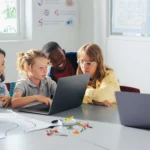
Whether solving a mathematics problem, presenting a science project, discussing literature, or defending a research idea, communication requires students to organize their thoughts logically and identify gaps in their understanding.
This process builds confidence while reinforcing learning far more effectively than passive memorization alone.
3. Collaboration Is an Essential Life Skill
Today’s workplaces rely on teamwork across cultures, countries, and disciplines.
Engineers collaborate with designers. Doctors work with healthcare teams. Business leaders communicate with clients across the globe. Researchers share ideas internationally.
Academic excellence remains important, but students also need to learn how to express their ideas clearly, listen actively, and work effectively with others.
Developing these communication skills during school prepares students for future academic and professional success.
4. Communication Builds Adaptability
Memorized answers may help in familiar situations, but real-life challenges often require students to think beyond prepared responses.
Activities such as discussions, presentations, debates, analytical writing, and problem-solving encourage students to adapt their thinking, defend their ideas with evidence, and communicate effectively with different audiences.
These experiences develop flexibility—an increasingly valuable skill in today’s rapidly changing world.
5. Every Student Learns Differently
Each learner has unique strengths.
Some students express themselves confidently through speaking, while others communicate better through writing, visual presentations, projects, or collaborative work.
An effective learning environment recognizes these differences and provides multiple opportunities for students to demonstrate understanding.
Personalized one-to-one tutoring enables instruction to be tailored to each student’s pace, learning style, academic goals, and individual strengths.
6. Human Skills Continue to Matter in the Age of AI
Artificial intelligence has transformed how students access information and complete routine tasks.
However, technology cannot replace the distinctly human abilities that define meaningful learning—curiosity, ethical judgment, creativity, empathy, leadership, and effective communication.
Students who learn to think critically, ask insightful questions, explain complex ideas clearly, and collaborate respectfully will continue to thrive alongside emerging technologies.
Rather than competing with AI, future-ready learners will know how to use it responsibly while strengthening the uniquely human skills that technology cannot fully replicate.
7. Learning How to Think
Education should help students become independent thinkers.
When students explain a concept, solve unfamiliar problems, justify their reasoning, or teach others, they move beyond memorization and develop genuine understanding.
These habits foster curiosity, confidence, and lifelong learning—qualities that benefit students well beyond school and university.
8. How Assessment Is Evolving
Across many educational systems worldwide, assessment methods are gradually expanding beyond traditional recall-based examinations.
While written tests remain important, educators increasingly value activities such as:
- Project-based learning
- Research assignments
- Presentations
- Group discussions
- Case studies
- Analytical and reflective writing
- Practical problem-solving
- Portfolio-based assessments
These approaches evaluate not only what students know but also how effectively they can apply and communicate their knowledge.
Building Future-Ready Learners
Modern education is not about replacing knowledge with communication—it is about combining both.
Students still need strong conceptual understanding, regular practice, and subject expertise. Equally important is the ability to explain ideas clearly, think critically, solve unfamiliar problems, collaborate effectively, and continue learning throughout life.
At Tutorwaves, we believe meaningful learning goes beyond completing lessons or preparing for examinations. Our live one-to-one online tutoring combines subject expertise with personalized learning plans, homework and assignment support, regular progress assessments, achievement reports, and ongoing parent communication to help students build confidence alongside academic excellence.
Whether a learner is in K–12, preparing for competitive examinations such as the SAT, ACT, GCSE, IB, AP, or pursuing university studies, our focus remains the same: helping every student understand deeply, communicate confidently, and achieve their fullest potential in an ever-changing world.