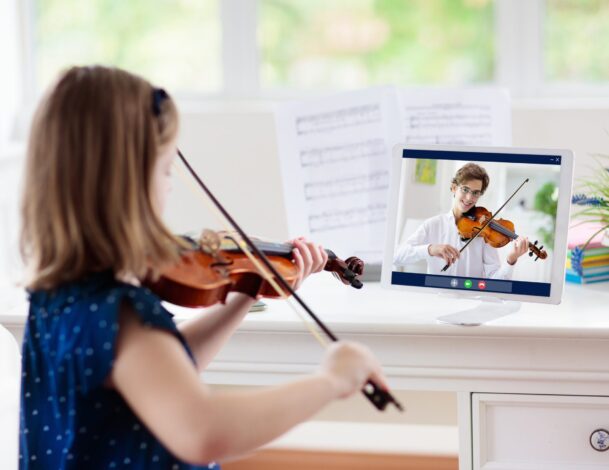
When people think of academic success, they often picture hours of studying, structured learning routines, and carefully planned schedules. While those strategies are important, there is another powerful and often overlooked tool that can transform the way students learn and thrive: the violin.
Playing the violin is more than creating beautiful music; it is an exercise in discipline, concentration, and mental agility. Let’s explore how this instrument can sharpen focus, boost memory, and foster academic excellence.
Sharper Focus Through Discipline
Learning the violin is a lesson in patience and precision. Unlike many activities where progress is quickly visible, mastering the violin requires consistent practice, persistence, and attention to detail. Every note must be played with the correct finger placement, bow angle, pressure, and timing. This constant need for accuracy trains students to pay close attention and maintain focus for extended periods.
The discipline gained from violin practice gradually extends beyond music. Students learn to break down big challenges into smaller, manageable steps, for example, mastering a difficult passage by practicing it slowly before playing the full piece. This structured, goal-oriented approach mirrors effective study habits in academics, whether it’s solving math problems step by step or carefully analyzing a passage in literature.
In addition, violin practice demands active listening and self-correction. Students must tune in to the smallest details, a slightly flat note, a missed rhythm, or an uneven bow stroke. This sharpens their concentration and builds a habit of sustained attention that carries over into classroom learning, exam preparation, and problem-solving.
Over time, the violin transforms into more than an instrument; it becomes a tool for mental discipline. By practicing regularly, students train their brains to resist distractions, persevere through difficulties, and stay engaged in the task at hand. These same skills are invaluable when it comes to studying effectively, managing time, and excelling in academics.
Boosting Memory and Cognitive Skills
Playing the violin is not only an artistic pursuit — it’s also a full workout for the brain. Every time a student picks up the instrument, they are engaging multiple areas of the mind simultaneously. Unlike passive activities, violin playing demands the coordination of memory, motor skills, and auditory processing all at once.
When learning a new piece, students must memorize finger placements, bowing patterns, rhythm, dynamics, and emotional expression. This process strengthens working memory (the brain’s ability to hold and manipulate information in the moment) while also improving long-term memory as pieces are rehearsed and recalled over time. These same memory systems are vital in academics — whether it’s retaining mathematical formulas, historical dates, or scientific concepts.
Research in neuroscience shows that musical training actually enhances brain plasticity, the brain’s ability to form new connections. The violin, in particular, activates both hemispheres of the brain:
- The left brain processes technical details like notes, timing, and structure.
- The right brain engages in creativity, emotional expression, and interpretation.
This whole-brain engagement improves working memory, long-term recall, and even language learning abilities. For students, this means remembering formulas, vocabulary, and historical facts becomes easier and more intuitive.
This dual activation leads to stronger neural pathways and improved cognitive flexibility, allowing students to switch between tasks, think critically, and solve problems more effectively.
Moreover, the constant practice of memorizing and reproducing complex sequences of notes helps improve pattern recognition skills, which are directly linked to success in math, coding, and analytical subjects. Studies also suggest that musicians often have superior verbal memory, aiding in language learning, reading comprehension, and essay writing.
In essence, the violin is not just about producing sound — it is a cognitive gymnasium, training the brain to remember more, think faster, and adapt better. For students, this translates into sharper memory recall during exams, greater mental agility in solving problems, and a lasting edge in academic performance.
Improved Academic Performance
Numerous studies link music education to higher academic achievement. Students involved in musical training often score better in math and science, thanks to enhanced pattern recognition and problem-solving skills.
Playing the violin also develops resilience and perseverance. Learning complex pieces takes patience, much like solving challenging math equations or writing essays. These transferable skills equip students to handle academic pressures with confidence.
Emotional Balance and Stress Relief
Academic life can be demanding; students are often juggling assignments, exams, extracurricular activities, and personal responsibilities. This constant pressure can lead to stress, anxiety, and even burnout. The violin offers a powerful outlet to restore balance and emotional well-being.
When students play the violin, they engage in a calming yet deeply expressive activity. The act of focusing on sound, rhythm, and movement provides a mindful break from daily pressures, similar to meditation. The vibrations of the instrument and the soothing melodies help slow down racing thoughts and release tension from the body.
Music also triggers the release of dopamine and endorphins, the brain’s “feel-good” chemicals, which uplift mood and reduce stress hormones like cortisol. For many students, this translates into better sleep, improved emotional regulation, and a greater sense of calm.
Beyond stress relief, the violin helps students channel emotions in a healthy way. Whether it’s joy, frustration, or sadness, music becomes a safe space for self-expression. This emotional outlet builds resilience, equipping students to handle academic challenges with confidence and composure.
In short, the violin doesn’t just ease stress — it nurtures emotional balance, helping students approach both schoolwork and life with a clearer, calmer mind.
A Lifelong Gift
One of the most beautiful aspects of learning the violin is that its benefits extend far beyond childhood or academic years — it is truly a lifelong gift. While grades and exams may come and go, the skills, discipline, and joy gained from music remain with students for life.
The violin cultivates qualities that stay relevant at every stage of personal and professional growth: perseverance, resilience, creativity, and emotional intelligence. These traits support not only academic success but also career advancement, personal fulfillment, and overall well-being. Unlike some activities that fade with time, playing the violin can be a lifelong companion, offering continuous learning and self-expression well into adulthood.
Music also serves as a timeless bridge between cultures and generations. A student who learns the violin today can connect with people worldwide through the universal language of music. Whether performing for family, joining an orchestra, or simply playing alone for relaxation, the violin creates meaningful experiences that enrich life at every age.
Furthermore, studies show that engaging with music later in life helps keep the brain active, sharpens memory, and even delays cognitive decline. In this way, the violin doesn’t just enhance a student’s academic journey — it becomes a source of joy, creativity, and mental vitality throughout life.
In short, the violin is much more than an instrument; it is an enduring gift of discipline, beauty, and growth. What begins as a step toward better focus and academic success evolves into a lifelong treasure that continues to inspire, heal, and connect.
Conclusion
At Tutorwaves, we encourage holistic learning approaches that go beyond textbooks. Whether it’s mastering algebra, improving reading comprehension, or exploring the arts, we know that skills like focus, memory, and creativity are interconnected. Encouraging students to learn instruments like the violin is not just about music — it’s about building sharper minds and brighter futures.